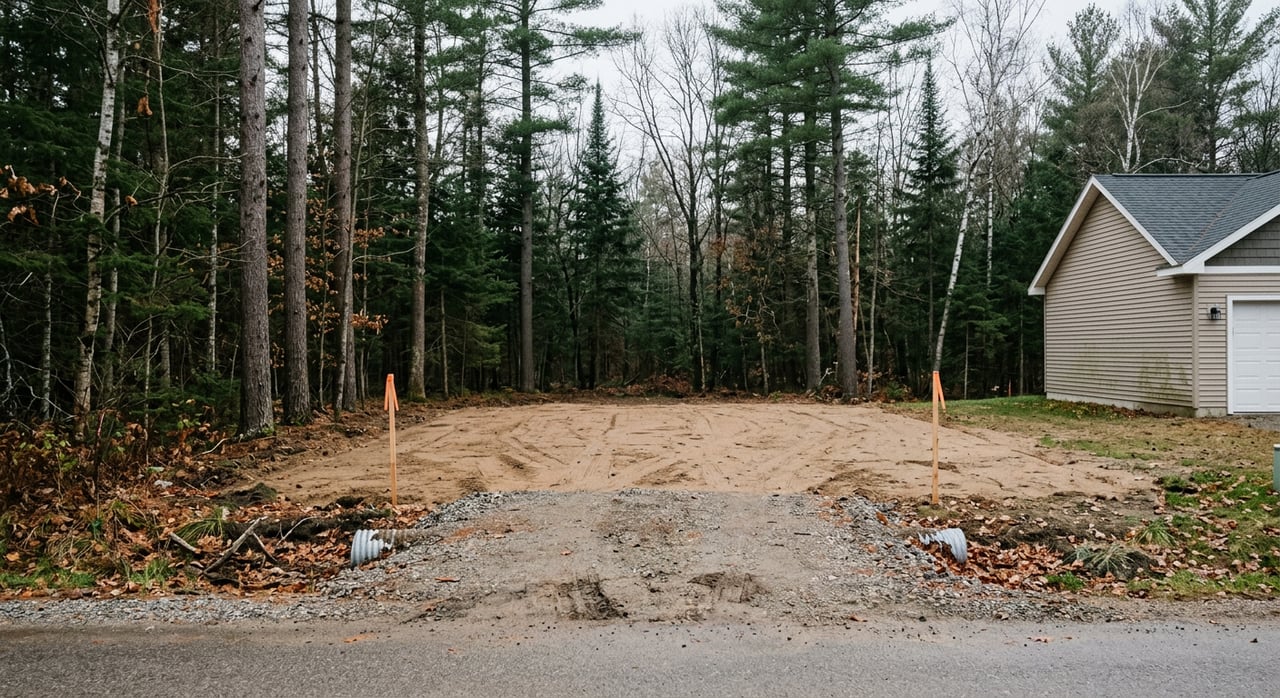
Buying Land Near Castle Rock Lake in 54646: Key Steps
March 24, 2026
March 24, 2026
Is a quiet cabin site near Castle Rock Lake calling your name? If you are eyeing land in 54646 (Necedah) for a future home, retreat, or weekend basecamp, you are smart to slow down and get the details right. Lake-area parcels come with special shoreland, septic, and access rules that can make or break your plans. This guide walks you through the essential steps, the local contacts that matter, and the pitfalls to avoid so you can buy with confidence. Let’s dive in.
Before you fall in love with a lot, confirm where it sits on the map. Castle Rock Lake is a reservoir on the Wisconsin River that spans multiple jurisdictions, including Juneau County and Adams County. County lines matter because shoreland, floodplain, and sanitary permits are all handled locally. The Castle Rock Lake overview from the Wisconsin DNR is a helpful starting point.
If you want easy public water access, look at proximity to Buckhorn State Park or county parks and boat ramps. You can see the area’s public landings on the DNR’s Castle Rock Lake boating and landings list. For parcels in zip code 54646, you will most often work with Juneau County offices for zoning, sanitary, and floodplain questions.
Many lots near Castle Rock Lake fall inside the shoreland zone. In Wisconsin, shoreland zoning generally applies to land within 1,000 feet of a lake’s ordinary high-water mark and within 300 feet of navigable rivers or streams. Juneau County explains how the rules work locally on its shoreland zoning page.
What do these rules control? Typical items include building setbacks from the water, vegetation removal along the shore, impervious surface limits, and when shoreline work needs permits. You should ask the county for a parcel-specific setback diagram early, especially if you plan a walkout basement, detached garage, or larger driveway. Do not assume a wide lake view equals a wide buildable footprint.
Floodplain overlays are also common along reservoir shorelines and lowlands. If the lot touches a regulated flood zone, you may need a floodplain permit and to build with elevated foundations or other mitigation. Start by reviewing Juneau County’s floodplain zoning resources and then check FEMA mapping for the exact zone. Your lender may require flood insurance if any structure will be in a regulated flood area.
For rural lake-area parcels, septic and water supply are the technical gatekeepers. Private on-site wastewater treatment systems (POWTS) are regulated under state codes and administered by the counties. A certified soil tester must complete a soil and site evaluation before a county can issue a sanitary permit. The Wisconsin DSPS provides clear guidance in its POWTS inspector handbook.
Your action plan:
Public access is not the same as private riparian rights. Some parcels have true waterfront with riparian rights. Others have deeded access through an association, which might include a shared boat launch or assigned slip. In some cases, there is no private docking allowed at all. Always confirm what the deed provides and request any association bylaws, rules, and docking agreements.
For docks and piers, Wisconsin’s rules allow many small residential piers without a state waterway permit, provided they meet size limits. Local counties still regulate structures and activities above the ordinary high-water mark. Before you assume you can place or enlarge a pier, review the DNR’s widely used guidance summarized here: pier, dock, and wharf regulations. Then confirm county expectations for any related shoreland permits.
Most lake-area parcels depend on private wells and septic systems, electrical service from a nearby utility or cooperative, and propane or other fuels for heating. Service availability and costs vary by parcel. Ask the listing agent which electric and broadband providers serve the site and whether service extensions are required.
Road access also matters. Is the driveway on a maintained public road or a private road controlled by an association? If it is private, request the road maintenance agreement and fee schedule. For driveways connecting to a county road, ask the County Highway Department about approach permits. Budget realistically for driveway construction, tree removal, grading, erosion control, and utility trenching.
Vacant-land financing looks different than a standard home mortgage. Many buyers choose a construction-to-permanent loan, which funds the build and then converts to a long-term mortgage when the home is complete. Lenders typically want a survey, evidence that septic and well plans are feasible, and a detailed budget with a builder contract. Get familiar with common structures using Fannie Mae’s overview of construction-to-permanent products.
Some buyers may be eligible for USDA Rural Development programs for a primary residence in eligible areas, subject to income and property rules. Review the USDA RD fact sheet for an at-a-glance summary of program basics and next steps: USDA Single Family Housing Guaranteed Loan Program. Talk with a lender early so you know what documentation you need before writing an offer.
Work through this list before you commit to price and timelines:
Here is a simple sequence to move from idea to offer with fewer surprises:
When you are ready to walk lots or pressure test a short list, you want a local guide who knows lake parcels, county processes, and realistic site budgets. Our team, led by broker Anamaria Gorius, helps you connect the dots between your vision, the county rules, and the right financing path so you can move forward with clarity.
Ready to plan your land purchase near Castle Rock Lake? Reach out to Your Local Real Estate Group for local guidance, on-the-ground insights, and a step-by-step plan that fits your goals.
Stay up to date on the latest real estate trends.

Whether you are buying or selling a home, Your Local Real Estate Group is eager to be your resource throughout the entire process. Their experienced professionals have access to top listings, a worldwide network, exceptional marketing strategies, and cutting-edge technology to help make your real estate experience memorable and enjoyable.