Understanding Lake Redstone Ownership Costs Before You Buy
April 2, 2026
April 2, 2026
Wondering whether a Lake Redstone home fits your budget long term, not just at closing? That is a smart question to ask. A lake property can offer the lifestyle you want, but it also comes with costs that many buyers underestimate. If you are comparing homes in and around Lake Redstone, this guide will help you understand the recurring expenses, planning items, and compliance issues that shape the true cost of ownership. Let’s dive in.
When you buy a home at Lake Redstone, your monthly mortgage is only part of the picture. Because Lake Redstone is a 612-acre lakefront community in the Town of La Valle with about 17.5 miles of shoreline, owners often need to budget for lake-related upkeep, environmental compliance, and seasonal maintenance in ways that inland homeowners may not.
According to the Town of La Valle comprehensive plan, both the town and county identify Lake Redstone as a priority natural resource. That matters because protecting the shoreline and water quality is part of living here, and that can affect both your yearly costs and your project planning.
One of the most common points of confusion for buyers is the difference between lake district charges and owner association dues. They are not the same thing.
The Lake Redstone Protection District appears to be funded through a tax levy, and the district notes that your property tax bill may include a line for the Lake Redstone District. In practical terms, that means you may see a district-related charge on your tax bill rather than a traditional mandatory HOA fee.
Separate from that, the Lake Redstone Property Owners’ Association appears to be a membership organization. Its current membership form lists $60 annual dues, which suggests this is a separate and voluntary cost rather than a replacement for district-related charges.
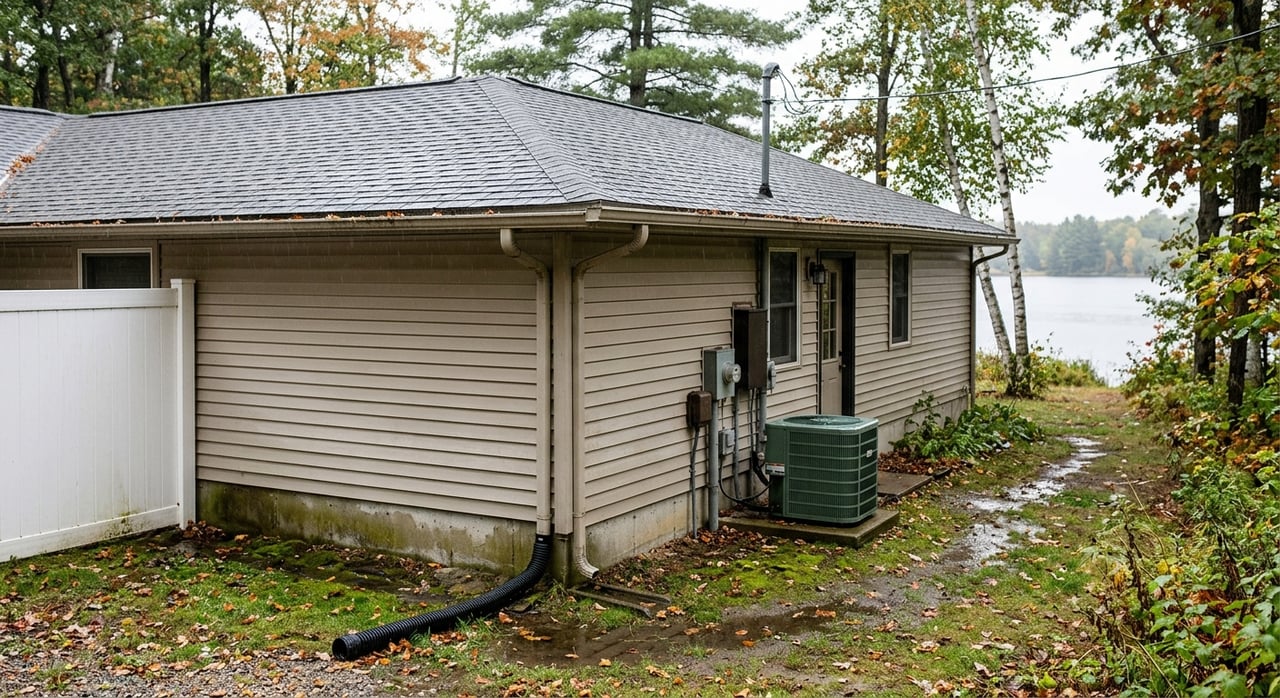
Shoreline maintenance is one of the biggest ongoing cost categories for many Lake Redstone owners. If your property needs erosion control, runoff management, or stabilization work, those projects can move from simple to expensive very quickly.
Sauk County says shoreland projects within 300 feet of the ordinary high-water mark, or on steeper slopes, may require special exception approval. The county also warns that land-use fees are tripled if work starts without permits, and septic fees are doubled when work begins without permits.
That means a shoreline project is not something to handle casually. Before you close on a home, it is worth understanding whether the lot shows signs of runoff, slope issues, or deferred shoreline work that could require permits and added investment.
There is some good news for owners planning shoreline improvements. The Lake Redstone Protection District shoreline improvement page says the district assessed the first 35 feet of every lake parcel in 2025 for runoff prevention, and those assessment summaries include cost-share information.
The district also says its 2025 shoreline reimbursement program can reimburse up to $2,000 per property, with possible added reimbursement through Sauk County and the Wisconsin DNR. For you as a buyer, that means shoreline work should still be part of your budget, but there may be opportunities to reduce your out-of-pocket costs if you plan ahead and follow the proper process.
Lake living usually means you will have more than just a yard to maintain. Docks, piers, boat lifts, and other waterfront structures often need setup, storage, repairs, or replacement over time.
The Wisconsin DNR explains that piers, docks, and wharves may be exempt or may require a general or individual permit depending on the project. The DNR also recommends that many owners remove these structures before freezing conditions, since ice can dislodge pilings and footings.
This is why dock ownership is rarely a one-time purchase. You may need to budget for seasonal installation and removal, winter storage, repairs, and future replacement depending on wear and weather.
Many rural and lake-area homes rely on private systems instead of municipal water and sewer. If the home you buy uses a private well and septic system, those systems become your responsibility.
Sauk County says private well owners should test drinking water every one to two years, and the county encourages annual testing because private wells are not monitored the way municipal water systems are. This is a small recurring cost compared with major repairs, but it is still part of responsible ownership.
Septic costs can be much larger. Sauk County’s ordinance and permitting framework includes categories for conventional systems, mound systems, holding tanks, drainfield replacement, plan review, and transfer or renewal work. The key takeaway is simple: septic replacement or major repair is a real capital expense, and permit costs can rise if work starts before review.
A Lake Redstone home often needs a different maintenance rhythm than a typical inland property. That is especially true if you use the home seasonally or if the property sits vacant for stretches of time.
The Wisconsin Department of Health Services advises homeowners to winterize for cold weather, and the Wisconsin DNR recommends removing waterfront structures before freeze-up when possible. In real life, that can mean paying for winterization, spring reopening, dehumidification, snow removal, and dock protection or removal.
These costs do not always show up evenly every year. That is what makes them easy to miss when you are first comparing homes.
Insurance is another area where lake buyers should avoid assumptions. Standard homeowners coverage may not tell the whole story.
FEMA flood maps are the official source used by communities and lenders to determine flood requirements. FloodSmart also notes that homes in Special Flood Hazard Areas with government-backed mortgages must carry flood insurance.
For a Lake Redstone purchase, you should verify the exact parcel-level flood situation rather than guessing based on proximity to water. Even two nearby homes can have very different insurance needs depending on elevation, mapping, and lender requirements.
If you are buying with short-term rental income in mind, compliance costs need to be part of your math from day one. You should not assume rental income will offset ownership costs unless you have confirmed the licensing path for that specific property.
Sauk County Environmental Health says all short-term rentals require a Tourist Rooming House license and a pre-inspection. DATCP also states that tourist rooming house licenses are annual and expire June 30, with license and pre-inspection fees listed for smaller establishments.
That means a rental strategy may include recurring licensing, inspection, and compliance expenses in addition to your normal ownership costs. For some buyers, that is manageable. For others, it changes the numbers enough to affect what property makes sense.
Even smaller use-based costs can add up over time. If you rely on county access points for the beach or boat landings, Sauk County says Lake Redstone entrance passes currently cost $5 for a day pass or $25 for an annual sticker.
That is not likely to make or break your purchase decision, but it is still part of the true cost of enjoying the lake regularly. Small recurring expenses are easy to overlook when you are focused on the purchase price.
If you are evaluating a Lake Redstone home, it helps to think in categories rather than one giant number. Your ownership budget may include:
When you look at a property through this lens, you get a much clearer view of affordability. That can help you avoid surprises and choose a home that supports your lifestyle goals.
Lake properties come with details that do not always show up in a standard online home search. Shoreline conditions, private utility systems, permitting issues, flood map questions, and rental rules can all affect what a home really costs to own.
That is why local guidance matters. When you work with a team that understands the Wisconsin Dells and Lake Redstone market, you can ask better questions before you buy and build a more realistic budget around the property you want.
If you are comparing lake homes, second homes, or investment opportunities around Lake Redstone, Your Local Real Estate Group can help you evaluate not just price, but the full ownership picture. Let’s talk about your next move.
Stay up to date on the latest real estate trends.

Whether you are buying or selling a home, Your Local Real Estate Group is eager to be your resource throughout the entire process. Their experienced professionals have access to top listings, a worldwide network, exceptional marketing strategies, and cutting-edge technology to help make your real estate experience memorable and enjoyable.